
The Heroes We Need
By Elena Greco
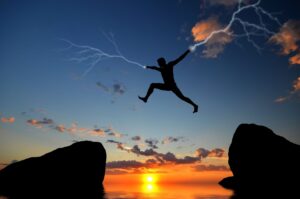
Image by Yuryy Bezrukov
The only difference between a hero and the villain
is that the villain chooses to use that power
in a way that is selfish and hurts other people.
~ Chadwick Boseman
Typical reading time: 5 minutes
March 31, 2025
I’ve been thinking a lot lately about why a certain group of people intensely revere a certain highly flawed character—especially when this person seems to go against all typically admired human qualities. I’ve come to the conclusion that these people needed a hero, and they couldn’t find one.
They needed someone who was close enough to the person they perceived themselves to be, but managed to rise above the limitations they perceived they possessed or endured, someone who would taunt or punish those who made them feel inferior, someone who would (pretend to) accept them and understand, someone all powerful. They needed a savior and they needed someone like themselves to look up to. They needed a hero.
It seems that these people view the individuals most of us would tend to admire for their positive attributes as “elite,” a term that—they’ve been taught through rigorous propaganda—represents their “oppressors.” They see those “elite” as better educated and more intelligent than they are, or born into better circumstances than they were, and they feel inferior to them. And they hate them for that. So it gives them great pleasure to venerate someone they falsely believe is like them, someone who disparages and punishes the “elite,” someone whose inflammatory, crude language and destructive actions give vent to their own anger.
It’s easy to hate someone who possesses something we believe we can never have or who makes us feel inferior, someone who by their “difference” from us makes them an easy target. And it’s easy to admire someone who publicly makes those people suffer—playing the adult version of the schoolyard bully who protects them, albeit only because they’re useful to him.
Although most studies about the nature of heroism have examined the positive and uplifting traits of heroes, I believe there’s also a different kind of hero, and that is perhaps the sort of hero that the group of people I just mentioned have chosen: villain as hero.
That’s what led me to think about heroes: who they are, and aren’t, and why and whether we need them.
I tried to remember individuals I’ve held up as my heroes in the past so that I could reflect on the reason that I held them in esteem. Invariably, they were people who did things or pursued goals that I valued greatly, or they exhibited character traits that I admired. Sometimes they possessed and expressed qualities that I felt I had within me but had great trouble expressing. Often they did the seemingly impossible, with apparently superhuman abilities, often with a charismatic presence, and gave me an example to strive for.
Heroes Past
Did you know that heroic and universally-admired opera singer Maria Callas had dermatomyositis, an autoimmune disorder and connective tissue disease that causes inflammation of the skin and muscles? Its symptoms are muscle weakness, shortness of breath, problems swallowing, and weakened voice. Can you imagine what singing opera on the world’s biggest stages in that condition must have been like for her? And at the standard at which she was expected, and which she expected herself, to perform? That disorder afflicted her during a time when singers simply did not share about vocal issues or personal challenges with the public, so she had to suffer in silence, enduring hostile, hateful remarks about her voice, her performance, and her vocal decline, all the while keeping her illness a secret. It must have been a nightmare for her.
And given her incredibly high standards—vocally, musically, and dramatically—it must have killed her to perform beneath her usual ability because of this secret affliction. She was truly a hero.
She was my hero, even before I knew of her illness and what it must have taken to perform in spite of it, solely due to the vocal and performance qualities she exhibited that were beyond anything anyone in that profession had ever done previously (or have since). But that she did those things in the presence of such a challenging affliction does make her seem superhuman.
Until recent years, actors in Hollywood, premiere opera singers, top-level athletes, and other public figures were expected, even required, by their management and by their fans, to maintain a god-like, larger-than-life, unblemished persona. We worshipped them as heroes—in this case, as humans who were inhuman, more god-like than we mortals.
Heroes Present
In recent decades we’ve gone from stars in all fields being required to appear as perfect and superhuman to a time when celebrities share it all, from warts to convictions to addictions. In reality, we all have unfortunate traits and bad habits. Some of us are also heroes.
I would hope that we could recognize that those who are our heroes are likely to have all-too-human traits. They simply (but not easily!) have risen above their issues, their doubts, and their challenges to express the higher side of themselves—the higher side of humanity. Our heroes no longer need be invincible or inhuman.
What is a hero, really?
A hero is often someone who’s seen as brave or courageous, someone who acts selflessly for some higher purpose than their own personal safety or satisfaction. Sometimes a hero is seen as having special abilities or qualities—that is, an object of devotion or admiration. Notice that the word object removes the humanity from the person. We often see heroes as more-than-human or super-human because they do things we don’t consider ourselves capable of. They put themselves at risk or discomfort for others or for the greater good. They exhibit self-sacrifice to a degree that many of us cannot contemplate. They seem to have greater abilities than we mortals possess.
We see them as being more courageous, more capable, more powerful than we are. They are often (but not always) charismatic. They can be the local fireman who plunges into a cold river to rescue a child, risking his own life. They can also be someone in our own field who exceeds what seems to be possible. Regardless of their qualities, they inspire us. And that is the key.
Why do we need heroes?
We need heroes because we need inspiration to give us hope and to goad us to accessing our highest potential. And we do need to laud those who go beyond self-centered behavior to use themselves for the greater good because those are values we should hold up as goals for our society. We need to venerate high achievement, selfless compassion, and self-sacrifice because that is what we aspire to as humans.
But do we need them to be super-human? More god-like than the rest of us?
I think a more useful view of heroes is that they’re individuals who exhibit the highest characteristics that a human being can possess. They are what we can be, if only we will. They give us something to strive for.
And while talent is generally required for an individual to be a great artist, heroic actions require only that a human being put aside their usual petty self and give themselves totally to a Higher Purpose. Any one of us can be a hero, if only we will.
Who are our heroes?
Heroes represent our highest ideals and values. It’s important that we choose our heroes carefully, choosing those who exemplify the highest in human nature, because they inspire our goals and actions. And they influence not only individuals, but they help create the society in which we live. If we choose our heroes badly, worshipping those who epitomize the worst of humanity, our society will disintegrate and our citizens will fall into darkness, that is, into a place where we venerate the worst of human nature, which can only result in regression of human evolution and societal progress and a less happy and fulfilling life for all.
Real heroes show us what’s possible for us as human beings. They help us to get in touch with the heroic within ourselves (yes, it’s there!) and inspire us to heroic action. It’s uplifting to admire them and aspire to be like them—at least the part of them that rises to the heroic. Just remember: there are no perfect heroes.
The Choice
Real heroes move us to be and do our best, and for our society and the people in it to evolve and thrive.
Following a negative hero (villain) can lead only to destruction and misery. We have only to think of Hitler to understand the full implications and result of following a charismatic “hero” who is really a manifestation of the most evil characteristics of humanity.
We need heroes—heroes that represent the best of us. They give us something to strive for, bring out our best, and ultimately raise up our society. It’s important to remember that we become like the company we keep, and that includes our heroes. We must choose our heroes wisely!
Most of us seldom utilize our full potential except in extraordinary circumstances. We call someone who pulls another person from a burning building a hero. They might not previously have thought of themselves as someone who could pull another person from a burning building, but that quality resided in them all along, didn’t it? It didn’t come from nowhere. The emergency called forth something in them that was always there, something that they didn’t see in themselves until circumstances so urgently required that they access it, that they stepped over their usual self-limiting thoughts and accessed their inherent ability. In that moment, they embodied the greatness that already existed in them.
Let’s not require a burning building in order to manifest our potential, all right? Instead, let’s look at the possibility that we can rise to our current circumstances in a way that we haven’t previously seen ourselves as capable of doing, and that we can do that regularly, so that living heroically becomes a habit. – from Elena Greco’s Abracadabra!