
Authenticity Redux
November 18, 2026
Four years ago I wrote an essay about Authenticity (AUTHENTICITY)—what it is, the cost of not having it, and how to regain it if you’ve lost it. I was reminded of that essay last week upon reading something from a creative professional in a related field, one who is an accomplished writer, who has apparently fallen in love with AI and seems to have come to the conclusion that using AI to write professionally is fabulous and acceptable and that ownership of creative work is perhaps a thing of the past.
I was disturbed by this enthusiastic declaration because this was someone who had always professed a support for creatives and the creative life, had established himself as an expert in that field, wrote many books about it, and made a nice living by doing so. Did he think it was fine to dismiss the authorship of creatives’ work and the resulting professional standing, personal reward, and livelihood they derived from their creative endeavors? Did he really think it was all right to incorporate AI’s writing into his own books or articles? I really don’t understand this train of thought. I also don’t understand how someone who values creativity can think it’s fine to let a robot create their work or that of other creatives.
As a result of reading this statement, I re-read my own essay about Authenticity, and was struck by the innocence of my 2022 perspective, one which had not yet been made aware of the encroaching dark shadow of AI on creative work and human life. While most of my essays have stood the test of time, that essay does not, because it doesn’t address the effect of AI on authenticity, and in particular on authentic creative work.
Quite a few creatives live a frugal life without much financial reward. The small benefit they receive from living a creative life comes 1) from selling their creative work (and this never compensates them for the time, materials, and energy they spent to produce it), and 2) from the personal validation or recognition that they receive, if only for a moment or a month, that augments the satisfaction they derive from creating their work, both of which help provide the incentive to keep producing their work. Why would anyone want to steal those meager benefits from them by removing them from ownership of their work?
I have had my writing and ideas stolen in the past, and it felt really rotten when it happened, as though something sacred had been taken from me. It was worse that it was stolen by a commercial enterprise that benefited from my creativity financially. If someone steals a physical possession of yours, or takes it without your permission, it results in a feeling of violation, and it is against the law. Stealing creative work (intellectual property) is also against the law. (There is a reason the whole area and practice of intellectual property law exists; I once worked for a firm that did nothing but IP work, and they were never short of clients.) If we take away that punishment, if anyone can claim ownership of your work or share it without attribution, it would cause not only psychological damage, but a psychological effect associated with creating that might ultimately—even likely—result in less creative output. That would be devasting to our culture and our future. (See LEGACY OF THE HEART.)
Even more unfortunate than the theft of ideas is this: AI can never have passion. It can never have emotion, compassion, or inspiration. It therefore cannot move us. It cannot inspire us. Because what AI offers us is simply information, even when it’s cleverly disguised in what it has learned are words that convey sympathy. AI is not a substitute for a human voice, whether aural or written, or a human spirit. Human thoughts and feelings are a requisite for healthy humans.
I have written pieces that seem to move or inspire people. In every single case, I wrote those pieces out of a profound feeling or emotion in myself that propelled me to write the words. I did not “construct” the words to “convey” emotion. I was emotional and that emotion came through the words I wrote when I was moved to share my feeling or conviction with others. That’s how creativity works. It’s not how AI works.
I enjoy using AI for gaining information, obtaining logistical or practical advice, and brainstorming. I appreciate the scientific advances that might be possible through the use of AI. Those are terrific uses of AI that will benefit us all.
But I will never use it in my creative work, and I will never share creative work as my own if contains even a morsel of content that is obtained from AI, as the resulting work would be inauthentic. Sharing AI-generated work under my own name would be a lie, and my own integrity would suffer. And, worst of all, it would not move people.
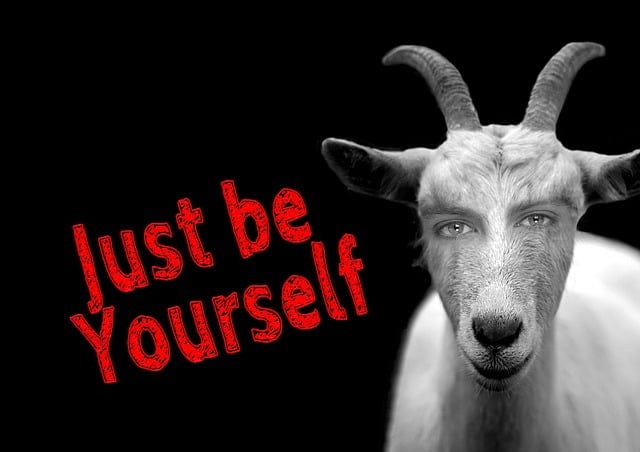
Authenticity matters.
I recommend reading my previous essay about Authenticity.
I also wrote twice before about AI: AI and Imagination and Exposing AI’s Shadow.